
Kohlrabi Guide: Nutrition, Taste Profile and Best Ways to Prepare and Eat

Kohlrabi looks a little like a vegetable from another planet, but it belongs in everyday cooking. Under that bulbous shape is a crisp, mild, useful vegetable that can be eaten raw, roasted, sautéed, steamed, or turned into slaw.
Quick summary
Taste Kohlrabi has a clean, slightly sweet flavor with a mild cabbage-broccoli note. Raw kohlrabi is crisp like an apple or jicama. Cooked kohlrabi becomes tender and mellow.
Nutrition It is low in calories and provides fiber, vitamin C, potassium, and small amounts of several B vitamins and minerals.
Best raw uses Peel it, slice it thin, and use it in slaws, salads, snack plates, and quick pickles.
Best cooked uses Roast it, sauté it, steam it, mash it with potatoes, or add it to soups and stir-fries.
What to buy Choose firm bulbs that feel heavy for their size. Smaller bulbs are usually sweeter and less woody.
What not to waste The leaves are edible and cook much like kale or collard greens.

What kohlrabi is and why it is worth trying
Kohlrabi is part of the brassica family, the same group as cabbage, broccoli, cauliflower, kale, and Brussels sprouts. The round part that looks like a root is actually a swollen stem that grows above the ground.
You may see green or purple kohlrabi at grocery stores, farmers markets, and CSA boxes. The purple skin is eye-catching, but the inside is usually pale green or white. Both types taste very similar.
The main reason to cook with kohlrabi is its range. Raw, it brings crunch without a sharp bite. Cooked, it takes on a soft, almost turnip-like texture without the stronger bitterness that turnips can have. That makes it easy to use in familiar recipes.
Kohlrabi nutrition in plain terms
Kohlrabi is a light, nutrient-dense vegetable. A cup of raw kohlrabi has relatively few calories, plenty of water, and a solid amount of fiber. It is also especially known for vitamin C, which supports normal immune function and helps the body absorb plant-based iron.
Here is the practical nutrition picture:
Nutrient | Why it matters in everyday eating |
Fiber | Helps meals feel more filling and supports regular digestion |
Vitamin C | Supports immune health and collagen formation |
Potassium | Helps support normal fluid balance and muscle function |
B vitamins | Help the body use energy from food |
Plant compounds | Brassica vegetables contain natural compounds that are part of a varied, plant-rich diet |
Purple kohlrabi may also contain anthocyanins in the skin, the same family of pigments found in red cabbage and purple grapes. Since the skin is often peeled, the main nutritional value still comes from the whole vegetable.
This kohlrabi guide is for general food and nutrition information only. It is not medical advice, and anyone managing a medical condition should follow guidance from a qualified health professional.
What kohlrabi tastes like
Kohlrabi has a mild brassica flavor, but it is less intense than cabbage and less earthy than turnips. The closest comparison is a mix of broccoli stems, radish, apple, and jicama.
Raw kohlrabi is:
Crisp
Juicy
Mildly sweet
Slightly peppery near the skin
Refreshing when chilled
Cooked kohlrabi is:
Tender
Mild
Slightly sweet
Similar to cooked broccoli stems or young turnips
Good at absorbing butter, olive oil, herbs, garlic, and broth
Size matters. Smaller bulbs, about the size of a tennis ball, tend to be sweeter and more tender. Very large bulbs can be fibrous, especially near the base. They are still usable, but they usually need thicker peeling and longer cooking.
How to choose, store, and prep kohlrabi
Look for kohlrabi bulbs that are firm, smooth, and heavy for their size. Avoid bulbs with soft spots, deep cracks, or shriveled skin. If the greens are attached, they should look fresh rather than wilted.
For storage, remove the leaves from the bulb when you get home. Store the bulbs in the refrigerator, loosely wrapped or in a produce bag. Store the leaves separately and use them sooner, since greens wilt faster than the bulbs.
To prep kohlrabi:
Cut off the stems and leaves.
Trim the root end.
Use a sharp knife or sturdy peeler to remove the tough outer skin.
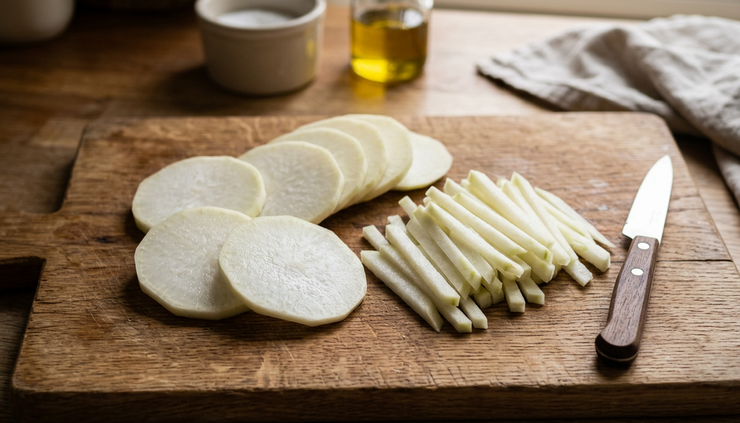
Cut the flesh into slices, matchsticks, cubes, or wedges.
The peel can be thicker than it looks, especially on larger kohlrabi. If the surface still feels stringy after peeling, take off another thin layer.
Do not throw away fresh leaves. Wash them well, remove tough stems if needed, and cook them like other sturdy greens. They are good sautéed with olive oil, garlic, salt, and a splash of vinegar or lemon juice.
The best ways to eat kohlrabi raw
Raw kohlrabi is the easiest place to start because its crunch is the star. Once peeled, it can go straight into salads, snack plates, or slaws.
Try these simple ideas:
Kohlrabi sticks with dip Cut peeled kohlrabi into sticks and serve with hummus, yogurt dip, ranch, or tahini sauce.
Quick slaw Shred kohlrabi with carrot and apple, then toss with lemon juice, olive oil, salt, and a little honey.
Crunchy salad Slice it thin and mix with cucumber, herbs, toasted nuts, and a bright vinaigrette.
Taco topping Use matchsticks of kohlrabi instead of cabbage for a crisp topping.
Quick pickles Thinly slice kohlrabi and cover with vinegar, water, salt, sugar, and spices for a fast refrigerator pickle.
A simple raw pairing formula works well. Use kohlrabi plus something sweet, something acidic, and something rich. Apple, lemon juice, and toasted walnuts make a good example.
The best ways to cook kohlrabi
Cooking softens kohlrabi and brings out its sweeter side. It works best when cut into evenly sized pieces so everything cooks at the same rate.
Roast it until golden
Roasting is one of the best methods for beginners. Cut peeled kohlrabi into wedges or cubes, toss with olive oil, salt, and pepper, then roast at 425°F until tender and browned at the edges.
Good add-ins include garlic powder, smoked paprika, thyme, rosemary, or grated Parmesan after roasting.
Sauté it for a fast side dish
Cut kohlrabi into small cubes or thin half moons. Cook in a skillet with olive oil or butter until lightly browned and tender. Add garlic near the end so it does not burn.
Finish with lemon juice, black pepper, and fresh parsley.
Steam or boil it for mashing
Kohlrabi can be steamed or boiled until tender, then mashed with butter, salt, and pepper. For a softer texture and familiar flavor, mash it with potatoes. This is a good use for larger bulbs that may be less ideal raw. But just remember that when you boil veggies, you lose some of the nutrients to the water (which if you then use that water in soups or to cook rice, you transfer those nutrients into these foods!).
Add it to soups and stir-fries
Cubed kohlrabi works in vegetable soups, chicken soup, lentil soup, and creamy pureed soups. In stir-fries, slice it thin so it cooks quickly while keeping a little crunch.
Use it anywhere you might use broccoli stems, turnips, or mild radishes.
Easy flavor pairings that work
Kohlrabi plays well with bright, creamy, salty, and nutty flavors. The mild taste makes it flexible.
Good pairings include:
Lemon, lime, and vinegar
Dill, parsley, cilantro, chives, and mint
Garlic, ginger, mustard, and horseradish
Butter, olive oil, yogurt, and sour cream
Apples, carrots, cucumbers, and cabbage
Sesame oil, soy sauce, peanuts, and cashews
Bacon, sausage, roast chicken, and grilled fish
For a quick weeknight side, roast kohlrabi with olive oil and salt, then finish it with lemon juice and Parmesan. For a lighter dish, keep it raw and toss it with apple, herbs, and a sharp vinaigrette.

The simplest way to start
If kohlrabi is new in the kitchen, buy one small bulb and try it two ways. Eat half raw in thin slices with salt and lemon. Roast the other half with olive oil until tender. That quick comparison shows the vegetable’s full personality.
Kohlrabi is mild, crisp, nutritious, and more useful than its odd shape suggests. Peel it well, season it clearly, and treat it like a cross between broccoli stems and a crunchy root vegetable. Once that clicks, it becomes easy to put into salads, slaws, soups, sheet-pan dinners, and simple sides.


Comments