
Elderberries: Health Benefits, Cautions, Flavor Profile, and Easy Ways to Use Them

Elderberries look like tiny dark beads, but they carry a long history in home kitchens and herbal medicine. Their appeal is easy to understand: they taste bold, they turn syrups and jams a jewel-purple color, and research suggests they may help ease some cold and flu symptoms when prepared safely.
Summary up front
Elderberries are tart, earthy, and berry-rich, with a flavor somewhere between blackberry, black currant, and cranberry. They are rarely eaten raw because they need cooking and sweetening to taste good and to make them safer (they are mildly toxic eaten raw to most).
Research on elderberry is promising but limited. Human studies suggest elderberry extracts may shorten or reduce symptoms of some upper respiratory infections, though it is not a cure, vaccine, or replacement for medical care.
Use elderberries safely by cooking ripe berries and avoiding leaves, stems, bark, roots, and unripe fruit. Raw or improperly prepared elderberries can cause nausea, vomiting, and diarrhea.
What research says about elderberry benefits
Elderberries contain anthocyanins, flavonols, phenolic acids, and vitamin C. These plant compounds give the berries their deep purple color and contribute to their antioxidant activity. That does not mean elderberry works like medicine in the body, but it helps explain why researchers have studied it for immune-related uses.
The best-known research focuses on colds and flu-like illnesses.
A randomized, double-blind, placebo-controlled trial by Zakay-Rones and colleagues, published in Sage Journals, studied a commercial elderberry syrup in people with influenza symptoms. The elderberry group reported symptom relief sooner than the placebo group. This study is often cited, though it was small and used a specific product.
A later randomized trial by Tiralongo, Wee, and Lea, published in Nutrients in 2016, looked at long-haul air travelers. Participants who took elderberry extract had less severe cold symptoms and shorter symptom duration compared with placebo. This does not prove elderberry prevents colds, but it supports the idea that elderberry may help reduce symptom burden.
A 2019 systematic review and meta-analysis by Hawkins, Baker, Cherry, and Dunne, published in Complementary Therapies in Medicine, found that elderberry supplementation was associated with reduced upper respiratory symptoms. The authors also noted that more high-quality studies are needed.
The clearest takeaway from current research is modest: elderberry may help with symptom duration or severity for some respiratory infections, but the evidence is not strong enough to treat it as a stand-alone remedy.
This article is informational only and is not medical advice. Anyone with a serious illness, high fever, worsening symptoms, or a chronic health condition should seek guidance from a qualified health professional.
Cautions before using elderberries
Elderberries are not a food to handle casually straight from the shrub. The most common culinary species is European black elder, Sambucus nigra. Other elder species exist, and not all are used the same way.
The main safety issue comes from compounds in the plant that can release cyanide in the body. These compounds are found especially in the leaves, stems, bark, roots, seeds, and unripe berries. Eating raw or poorly prepared elderberries has been linked to digestive symptoms such as nausea, vomiting, cramps, and diarrhea.
Follow these safety basics:
Use ripe, dark purple to black berries from a trusted source.
Remove stems carefully before cooking.
Cook berries before using them in syrups, jams, sauces, and baked goods.
Do not eat elder leaves, bark, roots, stems, or green berries.
Avoid homemade preparations if you are unsure of the plant identification.
Some people should be more cautious. Pregnant or breastfeeding people, small children, and people with autoimmune conditions should ask a clinician before using elderberry supplements. The same goes for anyone taking immune-suppressing drugs, diabetes medication, diuretics, or other regular prescriptions.
Elderberry supplements also vary widely. Gummies, syrups, capsules, and extracts can differ in strength, added sugar, and quality testing. Choose products from reputable brands that provide clear ingredient information.
What elderberries taste like
Fresh elderberries are intense rather than snackable. They are tart, tannic, earthy, and lightly floral, with a dark berry flavor that can feel almost wine-like after cooking. They do not have the candy-like sweetness of blueberries or the bright juiciness of raspberries.
Sugar changes them. So does acid. Lemon juice, orange zest, apple cider vinegar, and honey can make elderberry taste rounder and cleaner. Warm spices also fit naturally with the berry’s deep flavor.
Good pairings include:
Lemon, orange, and apple
Cinnamon, clove, ginger, and star anise
Honey, maple syrup, and brown sugar
Blackberry, blueberry, plum, and pear
Rosemary or thyme in savory sauces
Because elderberries have a strong color and concentrated taste, a little can go a long way.

Easy ways to prepare and use elderberries
Elderberries work best when cooked into something concentrated, strained, or sweetened. Dried elderberries are common in the United States and are often easier to find than fresh ones.
Use | How to make it | Best for |
Syrup | Simmer cooked berries with water, strain, then sweeten | Spoonfuls, drinks, pancakes |
Tea | Simmer dried berries, then strain well | Warm sipping, spice blends |
Jam or jelly | Cook berry juice with sugar, acid, and pectin if needed | Toast, biscuits, yogurt |
Shrub | Combine cooked elderberry juice with vinegar and sweetener | Sparkling water, mocktails |
Sauce | Simmer with fruit, herbs, and a little sugar | Pork, poultry, desserts |
Baked goods | Use cooked berries or jam as filling | Muffins, hand pies, crumbles |
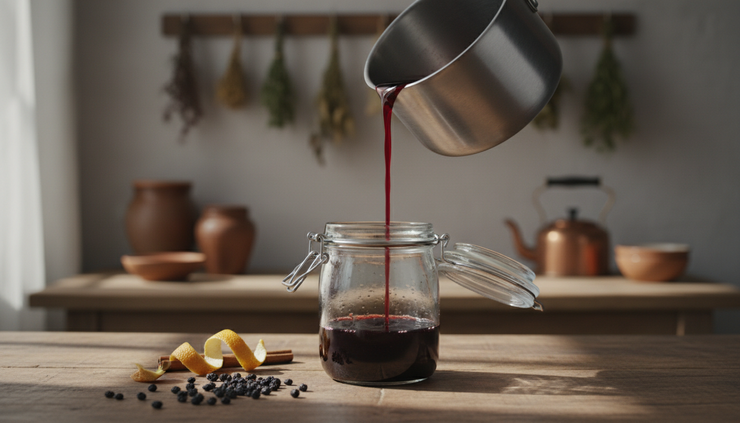
For a basic elderberry syrup, simmer dried or fresh elderberries with water for about 30 to 45 minutes, then strain through a fine-mesh sieve. Press the berries gently, discard the solids, and stir honey into the warm liquid after it cools slightly. Many home cooks add ginger, cinnamon, cloves, and lemon.
For a simple tea, simmer dried elderberries rather than just steeping them. Strain carefully before drinking. The result is dark, tart, and pleasant with honey and lemon.
For savory cooking, elderberry sauce can be excellent with roasted meats or mushrooms. Treat it like cranberry sauce: it needs sweetness, acidity, and salt to bring it into balance.

The takeaway
Elderberries are flavorful, versatile, and backed by some credible research, especially for reducing the duration or severity of certain cold and flu symptoms. The evidence is encouraging, not definitive.
The main rule is simple: cook ripe elderberries and avoid the rest of the plant. Once prepared properly, they can bring tart depth to syrups, teas, jams, sauces, shrubs, and baked goods. Treat them as a powerful culinary ingredient first, with possible wellness benefits as a bonus.


Comments